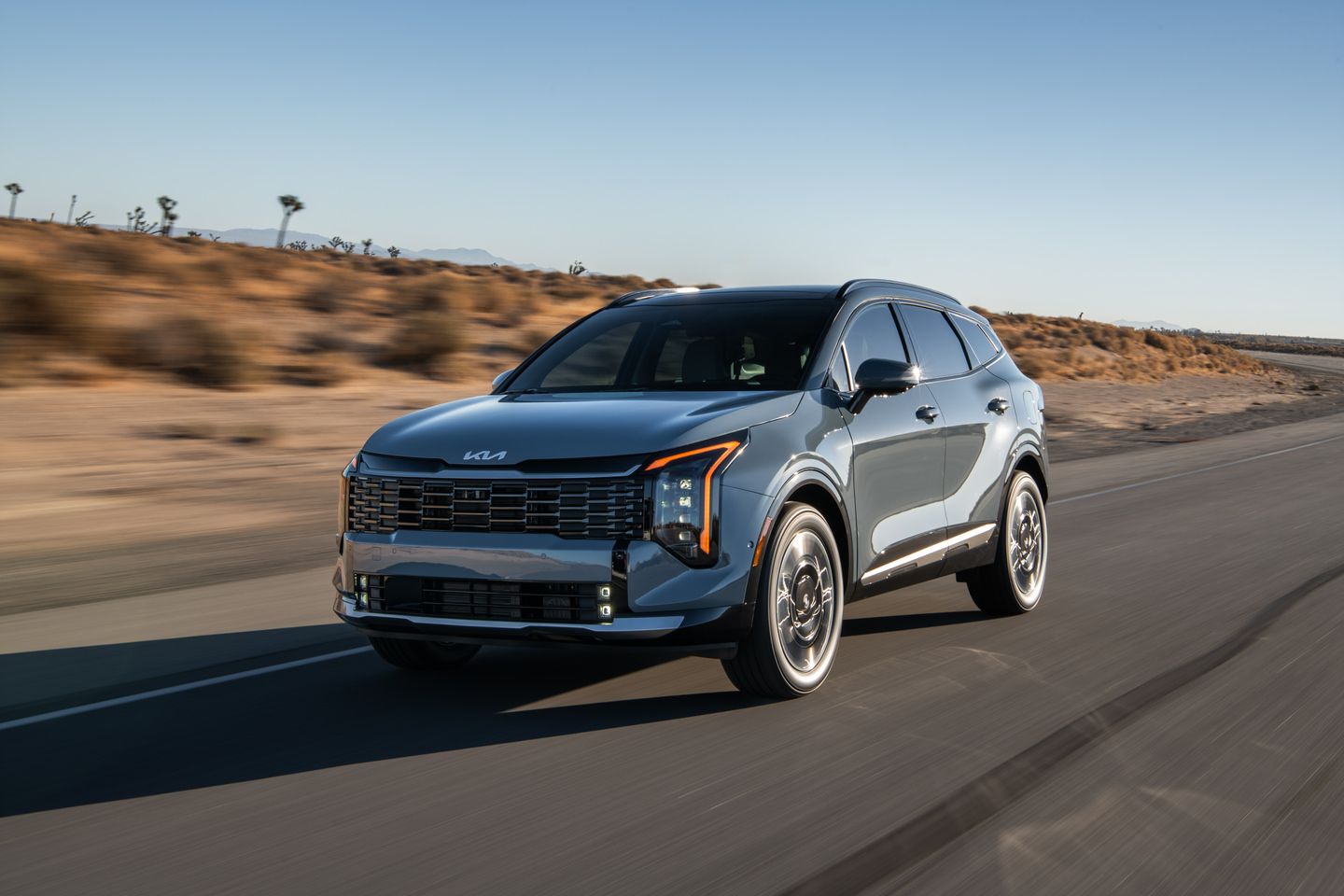
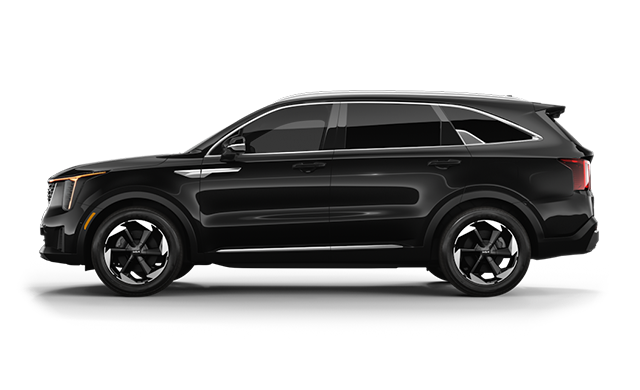
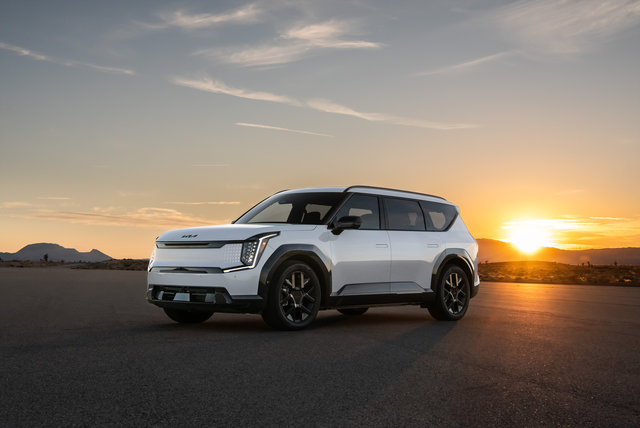
The 2026 Kia Sorento HEV answers a question many hybrid shoppers didn't know they were asking: what if you could get the fuel economy of a compact crossover without giving up three-row seating, substantial cargo capacity, or the torque to move a loaded family vehicle with confidence? The Sportage Hybrid delivers strong efficiency in a tidy footprint, but the Sorento HEV scales that same 1.6L turbo hybrid architecture up to meet the needs of families who've outgrown compact SUVs. For Manitoba drivers who need space for hockey gear, weekend camping trips, and six passengers, the Sorento HEV brings hybrid efficiency to a segment where it matters most.
|
Feature
|
2026 Sorento HEV
|
2026 Sportage Hybrid
|
|
Horsepower
|
227 hp 231-232 h
|
p
|
|
Torque
|
258 lb-ft 271 lb-ft
|
|
|
Fuel Economy (Combined)
|
7.0 L/100km
|
6.7 L/100km
|
|
Cargo Volume
|
2,139 L
|
977-2,087 L
|
|
Seating Capacity
|
6-passenger (EX+)
|
5-passenger
|
|
Towing Capacity
|
1,653-2,000 lb (750-907 kg)
|
2,000 lb
|
|
Transmission
|
6-speed automatic
|
6-speed automatic
|
What 227 hp and 258 lb-ft Actually Move
The Sorento HEV pairs a 1.6L turbocharged engine with a permanent magnet synchronous motor, delivering 227 hp and 258 lb-ft of torque through a 6-speed automatic transmission. While the Sportage Hybrid edges ahead with 231-232 hp and 271 lb-ft, the Sorento HEV's powertrain moves a three-row SUV with 6-passenger seating and up to 2,139 litres of cargo volume - a fundamentally different task than motivating a compact two-row crossover. For families loading camping gear, sports equipment, and a full passenger complement, the Sorento HEV's torque delivery handles real-world weight with the same responsiveness the Sportage Hybrid brings to lighter loads. Both vehicles use the same 6-speed automatic and AWD architecture, but the Sorento HEV applies that efficiency to a vehicle that can actually carry what Manitoba families need on weekends.
The Fuel Economy Gap - and Why Context Matters
The Sportage Hybrid achieves 6.7 L/100km combined, while the Sorento HEV returns 7.0 L/100km - a 0.3 L/100km difference that reflects the reality of moving a larger, heavier vehicle with more passenger and cargo capacity. For drivers covering 20,000 km annually, that gap translates to roughly 60 litres of fuel over a full year. While the Sportage Hybrid offers slightly better efficiency, the Sorento HEV delivers that 7.0 L/100km figure while hauling six passengers and 2,139 litres of gear - capability the Sportage Hybrid simply doesn't offer. For families who've been forced to choose between hybrid efficiency and three-row practicality, the Sorento HEV proves you can have both without the fuel penalty of traditional V6-powered three-row SUVs.
Where 2,139 Litres Changes the Equation
Cargo capacity separates these vehicles more than any other metric. The Sorento HEV provides 2,139 litres of maximum cargo volume with the second and third rows folded, while the Sportage Hybrid offers 977-2,087 litres depending on configuration. That difference matters for Manitoba families loading hockey bags, camping gear, or building supplies. While the Sportage Hybrid handles daily errands and weekend trips efficiently, the Sorento HEV accommodates the gear that comes with six-passenger family adventures - without requiring a roof box or trailer. The dual-level cargo floor in the Sportage Hybrid adds organization, but the Sorento HEV's sheer volume handles larger items that won't fit in a compact crossover regardless of how cleverly the floor is configured.
Six Passengers vs Five - The Third Row Advantage
The Sorento HEV offers 6-passenger seating across three rows starting in the EX trim, a configuration the Sportage Hybrid doesn't provide. For families with three or more children, carpooling parents, or multi-generational households, that third row eliminates the need for a second vehicle on family trips. While the Sportage Hybrid's 1,050mm of rear legroom serves two adults comfortably, the Sorento HEV's three-row layout accommodates the reality of families who've outgrown five-seat vehicles. The third row isn't a compromise - it's the reason families choose the Sorento HEV over compact alternatives, even when fuel economy takes a modest step back.
Technology Across the Lineup
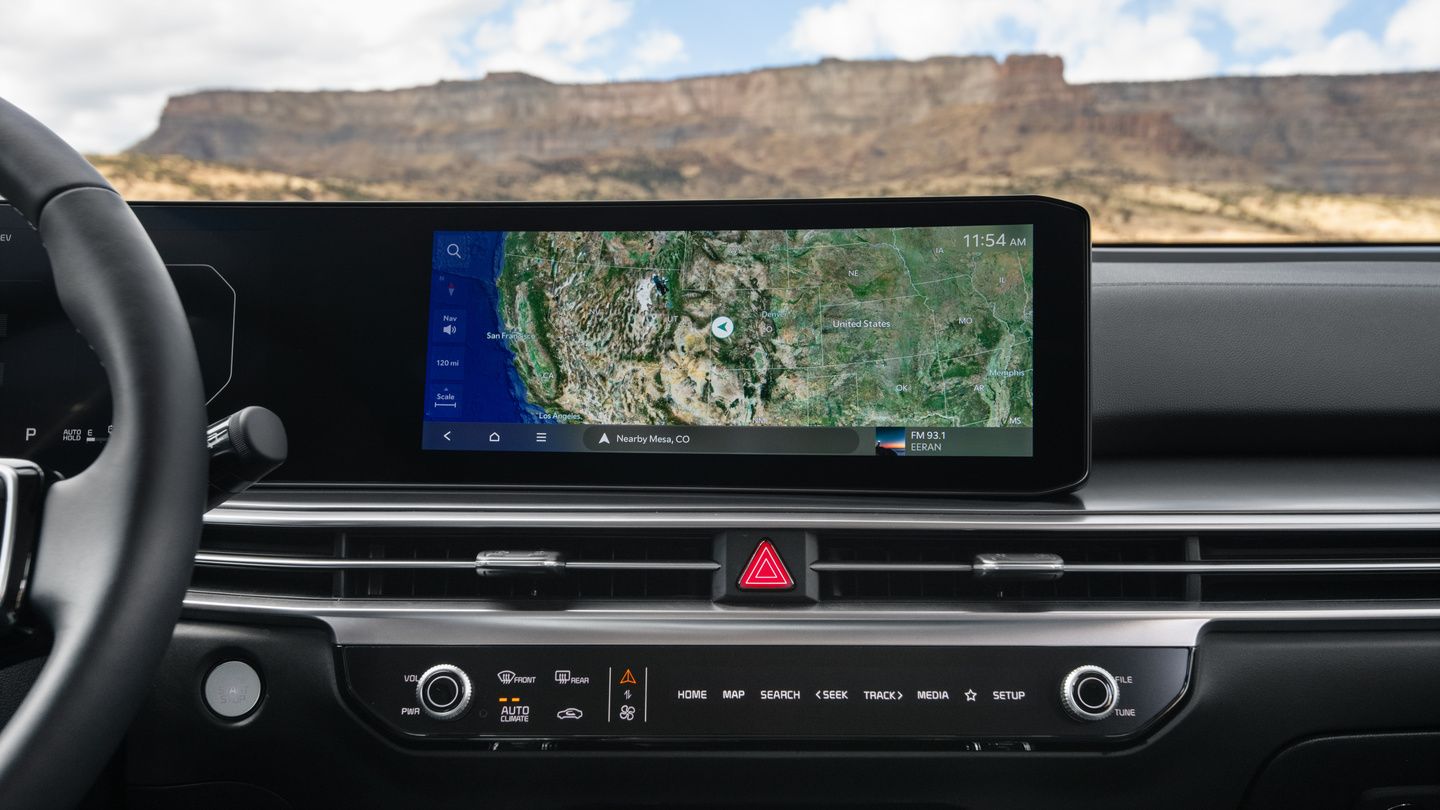
The Sorento HEV's technology stack scales across three trims. The LX includes a 4-inch TFT instrument cluster and 6-speaker audio, while the EX adds wireless phone charging, HomeLink, and a smart power liftgate. The SX brings the full suite:
- 12.3-inch Supervision LCD/TFT instrument cluster
- Bose premium audio system
- Digital Key
- Navigation
- 110V inverter
- OTA software updates
The Sportage Hybrid offers dual 12.3-inch panoramic displays and an available 10-inch head-up display starting in the EX trim, features the Sorento HEV matches in the SX. Both vehicles include wireless Apple CarPlay and Android Auto, but the Sorento HEV's OTA update capability keeps the system current without requiring dealership visits - a convenience that matters more over a 5-7 year ownership cycle.
Safety Features That Scale With Size
Both vehicles share Kia's core safety architecture, but the Sorento HEV's SX trim adds systems designed for larger vehicles:
- Surround view monitor
- Blind view monitor
- Highway Drive Assist 2
- Parking collision avoidance assist (reverse)
- Forward Collision Avoidance Assist 2
The Sportage Hybrid includes HDA2, Forward Collision Avoidance Assist 2 with Direct Oncoming Detection, and front/side/rear parking distance warning across its lineup. While the Sportage Hybrid's compact dimensions make parking and maneuvering easier in urban settings, the Sorento HEV's surround view monitor and parking collision avoidance assist compensate for its larger footprint - particularly valuable for Manitoba drivers navigating tight parkades during winter months.
Towing Capacity - Where They Meet
Both vehicles handle up to 2,000 lb of towing capacity, though the Sorento HEV's base LX trim starts at 1,653 lb with the maximum rating available on higher trims. For families towing small utility trailers, lightweight campers, or bike racks, both vehicles deliver comparable capability. The Sportage Hybrid achieves that rating in a smaller package, while the Sorento HEV pairs it with the cargo volume to carry gear inside the vehicle - reducing the need for a trailer on many trips. Trailer stability assist comes standard on the Sorento HEV, a feature particularly valuable for first-time towers learning to manage hybrid regenerative braking while towing.
The Verdict for Manitoba Families Who Need Three Rows
The Sportage Hybrid delivers 6.7 L/100km efficiency in a compact, agile package that suits urban commuters and couples perfectly. But for Manitoba families who need six seats, 2,139 litres of cargo space, and the ability to handle hockey tournaments, camping trips, and Costco runs without sacrificing hybrid fuel economy, the 2026 Sorento HEV answers that need. The 0.3 L/100km fuel economy difference disappears in context when the Sorento HEV eliminates the need for a second vehicle, a roof box, or the compromise of leaving gear behind. The Sorento HEV brings hybrid efficiency to the three-row segment without the fuel penalty families have accepted for years - and that changes the equation for buyers who thought they had to choose between efficiency and space.
Visit Winnipeg Kia in Winnipeg to compare the Sorento HEV and Sportage Hybrid lineups and find the hybrid that fits your family's needs.
To learn more about the 2026 Kia Sportage HEV, visit Kia.ca