



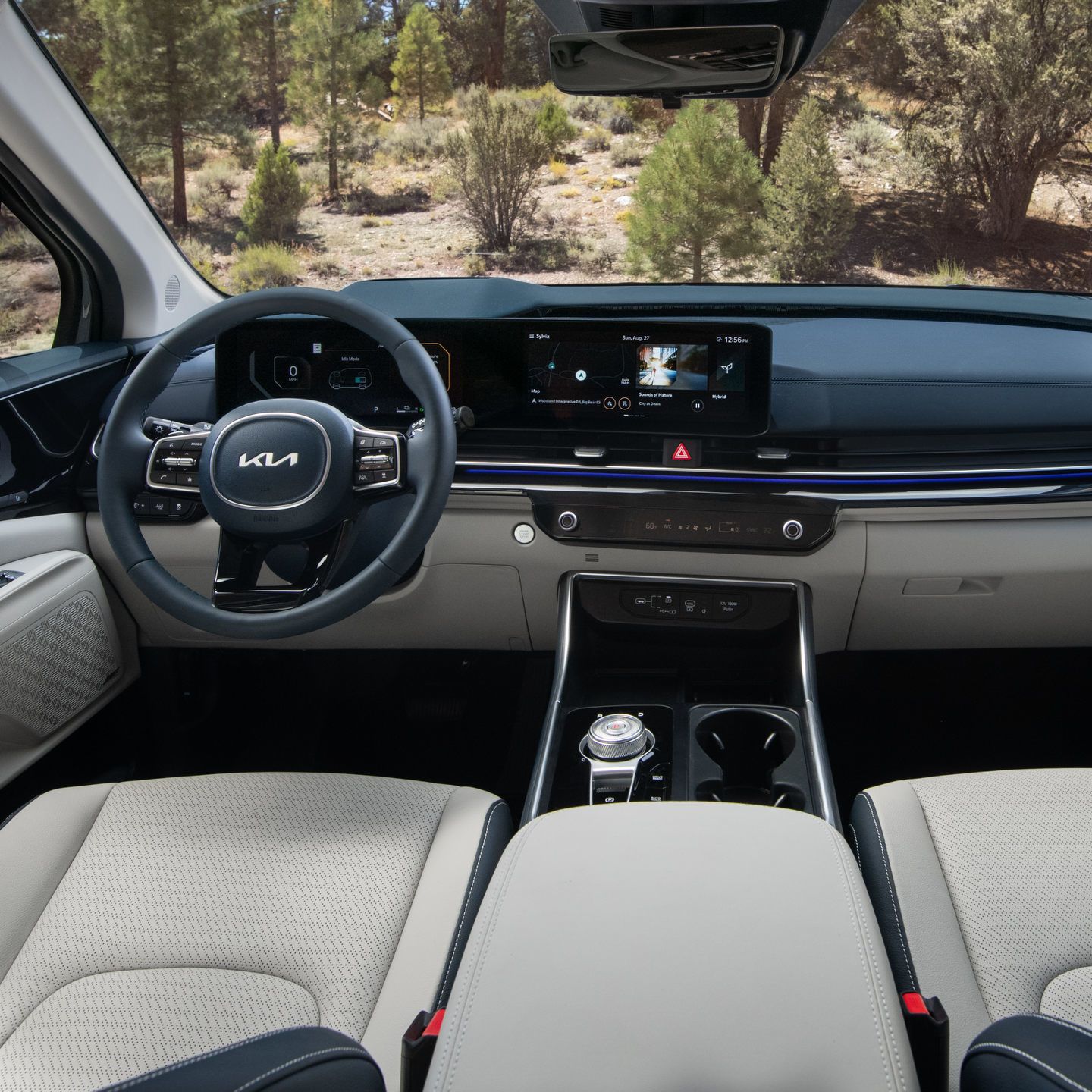
The 2027 Kia Carnival HEV turns its 54 kW electric drive motor into a safety tool. Through E-Evasive Handling Assist, the motor manages front and rear load shift when a driver swerves, helping the minivan stay planted and recover its line. E-Handling sharpens cornering response, and E-Ride uses motor braking to smooth the van over rough pavement. Because the motor reacts faster than brake-based stability control, the van settles sooner after a sudden avoidance move.
That motor logic sits on top of Forward Collision-Avoidance Assist 2.0, which adds Junction Crossing, Lane-change Side, Lane-change Oncoming, and Evasive Steering Assist. Every HEV trim shares the same 242 hp, 270 lb-ft front-wheel-drive powertrain and 7.2 L/100 km combined rating, so choosing between LX, LX+, EX, SX, and SX+ comes down to convenience features. Winnipeg Kia can walk Manitoba families through the differences.
- Understand the three motor-based functions before comparing minivans: E-Evasive Handling Assist for emergency steering, E-Handling for cornering, and E-Ride for comfort.
- Compare the FCA 2.0 coverage against rivals, especially cross-traffic detection at intersections and steering assistance when braking alone cannot avoid a hazard.
- Note the standard driver aids on every HEV trim, including Lane Following Assist 2 with Hands-On Detection and Advanced Smart Cruise Control with Stop & Go.
- Choose the SX HEV or SX+ HEV if Remote Smart Parking Assist matters for tight Winnipeg parking spots; otherwise the LX, LX+, or EX HEV delivers the same safety core.
- Book a demonstration at Winnipeg Kia to feel how the van responds during a controlled lane change, and bring the whole family so you can judge the cabin at the same time.
Most minivan stability systems act only through the brakes. Using the hybrid drive motor to manage body movement gives Manitoba families a faster-reacting layer of protection on icy highways, wet ramps, and crowded city streets.
